The Ultimate Guide to Getting Your Commercial Driver's License (CDL)
Ready to kickstart a rewarding career on the road? Getting your Commercial Driver's License (CDL) is your first big step. Our comprehensive guide breaks down the entire process, from understanding CDL classes and endorsements to navigating training requirements and passing your skills test. Your roadmap to a professional trucking career starts here!
2/27/20244 min read
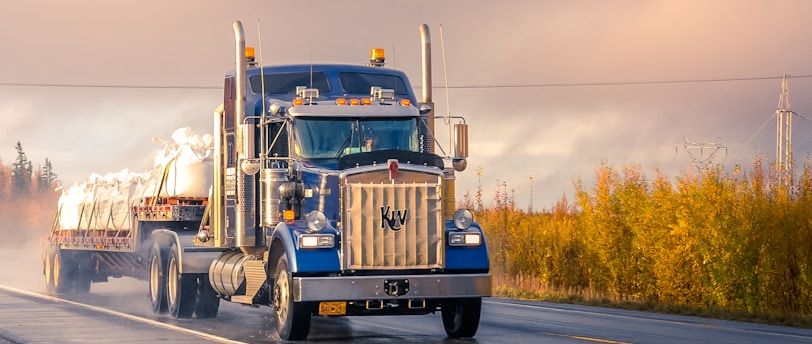
The Commercial Driver's License, or CDL, is more than just a piece of plastic. It's the golden ticket to a professional career in an industry that forms the backbone of the American economy. It represents a high level of skill, knowledge, and responsibility.
But for many, the path to getting a CDL seems like a maze of acronyms, regulations, and tests. It can feel overwhelming.
Forget the confusion. This is your definitive, step-by-step roadmap. By the end of this guide, you will have a clear understanding of the entire process, from first stepping into a classroom to finally holding your professional license.
What is a CDL and Why Do You Need One?
A CDL is a driver's license required by federal law for anyone operating certain types of commercial motor vehicles (CMVs). The Commercial Motor Vehicle Safety Act of 1986 established a single, national standard to ensure that drivers of large and heavy vehicles are highly qualified, promoting safety on our nation's highways.
You need a CDL if you operate a vehicle that:
Has a Gross Combination Weight Rating (GCWR) of 26,001 lbs. or more, including a towed unit with a weight of more than 10,000 lbs.
Has a Gross Vehicle Weight Rating (GVWR) of 26,001 lbs. or more.
Is designed to transport 16 or more passengers (including the driver).
Is of any size and is used to transport hazardous materials (HAZMAT).
The Building Blocks: CDL Classes Explained
Not all CDLs are created equal. The class of your license determines the type and weight of the vehicle you are legally allowed to operate.
Class A CDL: The King of the Road
This is the most common and versatile license. It allows you to operate any combination of vehicles with a GCWR of 26,001 lbs. or more, provided the towed vehicle is heavier than 10,000 lbs.
You can drive: Tractor-trailers (big rigs), truck and trailer combinations, flatbeds, and tankers.
Bonus: A Class A license also allows you to drive Class B and Class C vehicles.
Class B CDL: The Heavy Straight Vehicle
This license is for operating a single vehicle with a GVWR of 26,001 lbs. or more, or towing a vehicle that does not exceed 10,000 lbs.
You can drive: Straight trucks, large box trucks (for delivery), dump trucks, and city buses.
Class C CDL: Specialized Transport
This is for vehicles that don't meet the criteria for Class A or B but are designed to transport 16+ passengers or are placarded for hazardous materials.
You can drive: Passenger vans, small HAZMAT trucks, and shuttle buses.
Supercharge Your License: Endorsements & Restrictions
Endorsements are special certifications you can add to your CDL to legally haul specific types of freight. They require passing additional knowledge tests.
T: Double/Triple Trailers
P: Passenger Transport
N: Tank Vehicle (for liquids or gasses)
H: Hazardous Materials (HAZMAT)
X: Combination of Tank Vehicle and HAZMAT
S: School Bus
Conversely, Restrictions can be placed on your license that limit what you can operate. For example, an "L" restriction means you are not authorized to operate a vehicle with air brakes, which severely limits your job prospects.
Your Step-by-Step Roadmap to Getting Your CDL
Here is the exact path you will follow, broken down into manageable steps.
Step 1: Meet the Basic Requirements
Before you even begin, you must meet federal and state requirements. In most states, you must be at least 21 years old for interstate (across state lines) driving or 18 for intrastate (within one state) driving. You will also need to pass a DOT physical exam to get your Medical Examiner's Certificate.
Step 2: Get Your Commercial Learner's Permit (CLP)
The CLP is your learner's permit for the trucking world. To get it, you must pass a series of written knowledge tests at your state's DMV. These typically include General Knowledge, Air Brakes, and Combination Vehicles. You must hold your CLP for a minimum of 14 days before you can take your final skills test.
Step 3: Complete Entry-Level Driver Training (ELDT)
As of February 2022, this is a mandatory federal requirement. You must complete a specific curriculum of theory and behind-the-wheel training from a school or provider listed on the FMCSA's Training Provider Registry. You cannot take your skills test without this certification.
Step 4: The Final Boss – The CDL Skills Test
This is the final, three-part, in-person exam. You must pass all three sections.
Vehicle Pre-Trip Inspection: You must prove you can identify and inspect all key components of your vehicle to ensure it is safe to operate.
Basic Control Skills: This is a test of your low-speed maneuvering abilities, typically involving various backing exercises (e.g., straight-line backing, offset backing, parallel parking).
Public Road Test: An examiner will ride with you on a designated route to evaluate your driving skills in real-world traffic situations.
Step 5: License Issuance!
Once you successfully pass the skills test, you will return to the DMV, turn in your CLP, and receive your official Commercial Driver's License.
The Financial Question: How Much Does It Really Cost?
The cost of getting a CDL varies widely but is primarily driven by the cost of your ELDT program.
CDL School Tuition: This can range from $3,000 to $10,000.
Fees: Expect to pay smaller fees for your CLP, the license itself, and exam retakes if needed.
Many trucking companies offer company-sponsored training where they cover the upfront cost in exchange for a commitment to drive for them for a set period.
Your Career Starts Now
Getting your CDL is a rigorous process, and for good reason. It proves you have the knowledge and skill to safely operate a powerful vehicle and join the ranks of America's most essential professionals. It's a challenging but incredibly rewarding journey.
Now that you have the complete roadmap to getting your license, it’s vital to understand the industry you are about to join.
Have more questions?
Connect with us: Follow our official channels for daily insights.
Stay informed: Subscribe to our newsletter for expert tips.
Ask us anything: For a personal consultation, email our team at info@pathburn.com.